

Water Management
Water Management
Significance & Commitment
Water is a vital resource for both communities and industry. Inefficient water management can lead to serious consequences, from environmental degradation and water scarcity to conflicts with local communities, and ultimately affect the Company’s credibility. the Company is therefore committed to responsible water stewardship, recognizing water as a shared resource that must be managed sustainably and equitably.
Management Approach
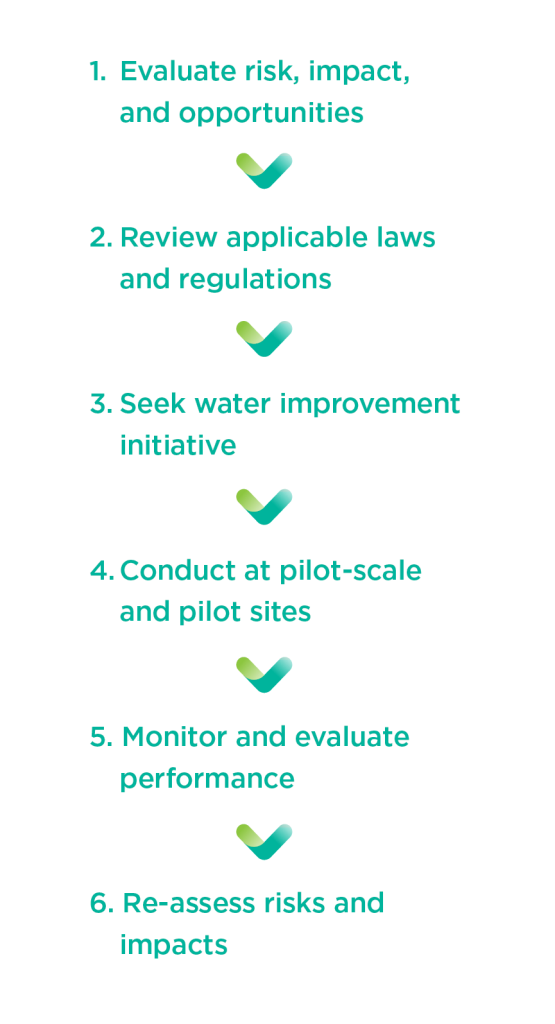
The Company has established a robust water management framework, underpinned by a comprehensive database that tracks water consumption and maintains a water balance across the business units. Each year, the Company conducted a water risk and impact assessment to shape site-specific water management plans. These plans align with the water management hierarchy, including elimination, reduction, and reuse/recycle, and address all phases of the water lifecycle: withdrawal, consumption, and discharge. Minimum discharge limits are also set for each operation to ensure full regulatory compliance. In addition, the Company collaborates closely with government agencies, water users, local communities, and other stakeholders to promote efficient and sustainable water use. These efforts reflect the Company’s commitment to minimizing water-related impacts on the environment and protecting stakeholder interests.
Water-Related Risk Management
Banpu actively manages water-related risks by conducting annual water risk and impact assessments across self-operated assets, focusing on water quantity, water quality, and water availability to identify potential risks and prepare for management plans and mitigation measures.
This water-related risk assessment employs internationally recognized tools and standards, such as the World Resource Institute (WRI)’s Aqueduct Tools, to assess exposure to water-stressed areas and applies ISO 14046 to evaluate water footprint of a product. Additionally, advanced tools like GoldSim are used to simulate groundwater flow and site water balance for underground mines throughout their life cycle.
In addition, we actively collaborate with stakeholders, particularly government agencies, local communities, and other stakeholders, through various channels such as public meetings and engagement surveys. This ensures real-time awareness of water-related issues and regulatory changes. We also steward water as a shared resource with local communities and other water users in its sector, as well as enhance inspection of water management practices and sediment control in underground mining.
Year in Review
In 2024, the Company advanced water stewardship efforts by implementing site-specific Water Management Plans (WWPs) and Trigger Action Response Plans (TARPs) at the mining operations in Australia to manage water discharges effectively. These measures support reductions in water consumption and better control over water-related risks. To reinforce this progress, the water management standard was updated. The revision focused on minimizing dependency on natural water sources, improving internal water processes, and providing clearer guidance for site-level risk and impact assessments to further improve mitigation measures.
 English
  Thai
Thai