
Closure & Rehabilitation
Closure & Rehabilitation
Significance & Commitment
Banpu is committed to responsible mining and sustainable practices. Recognizing that all mining operations eventually reach the end of their lifecycle, the Company commits to developing mine closure and rehabilitation plans from the project inception and closely monitoring them through to the end of mine life to ensure sustainable ecosystems and stakeholder trust throughout the asset lifecycle.
Management Approach
The Company upholds a rigorous mine closure standard aligned with the International Council on Mining & Metals (ICMM) guidelines and applied across all business units. For each site, mine closure and rehabilitation plans are grounded in an Environmental Impact Assessment (EIA) and a Social Impact Assessment (SIA) conducted prior to project commencement to ensure that community needs are addressed and potential negative impacts are mitigated.
Throughout the mining lifecycle, mine closure and rehabilitation activities, covering both environmental and social dimensions, are closely monitored and reviewed quarterly by the Mine Closure Committee. These efforts aim to ensure long-term ecosystem stability and community livelihood, in line with closure plans and best practices.
Subsidence is a known risk in underground mining. Inefficient subsidence management can pose significant environmental and safety threats, including land deformation, hydrologic disruptions, and damage to infrastructures and surrounding residences. To address and mitigate these risks, the Company explores and applies advanced subsidence management technologies to protect both the environment and nearby communities.
Rehabilitation Management
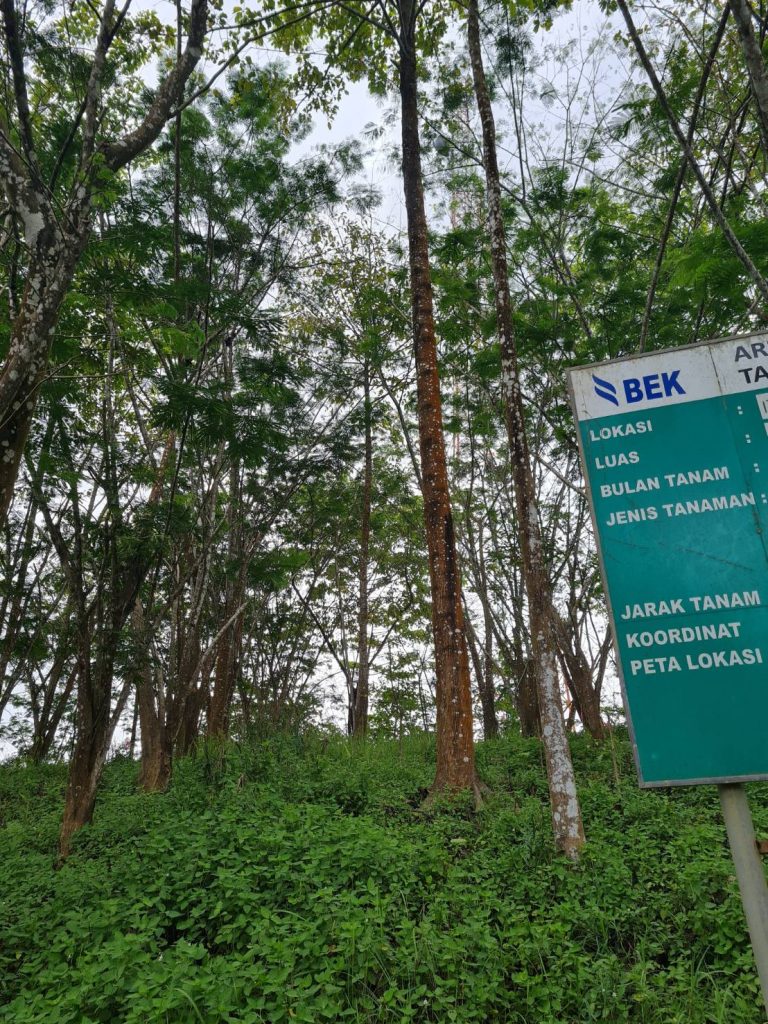
In alignment with the International Council on Mining and Metals (ICMM) principles, Banpu adopts a progressive rehabilitation approach for open-pit mining to ensure sustainable post-mining land use and ecosystem restoration. Rehabilitation is carried out continuously throughout the mine’s life, with revegetation efforts focused on restoring the ecosystems in ex-mining areas by planting native species with economic value. Overburden materials are used to backfill voids, reducing void areas in compliance with the regulatory requirements. Ongoing biodiversity monitoring is performed to ensure rehabilitation effectiveness. In addition, watershed rehabilitation obligations are fulfilled and officially handed over to the government authorities.
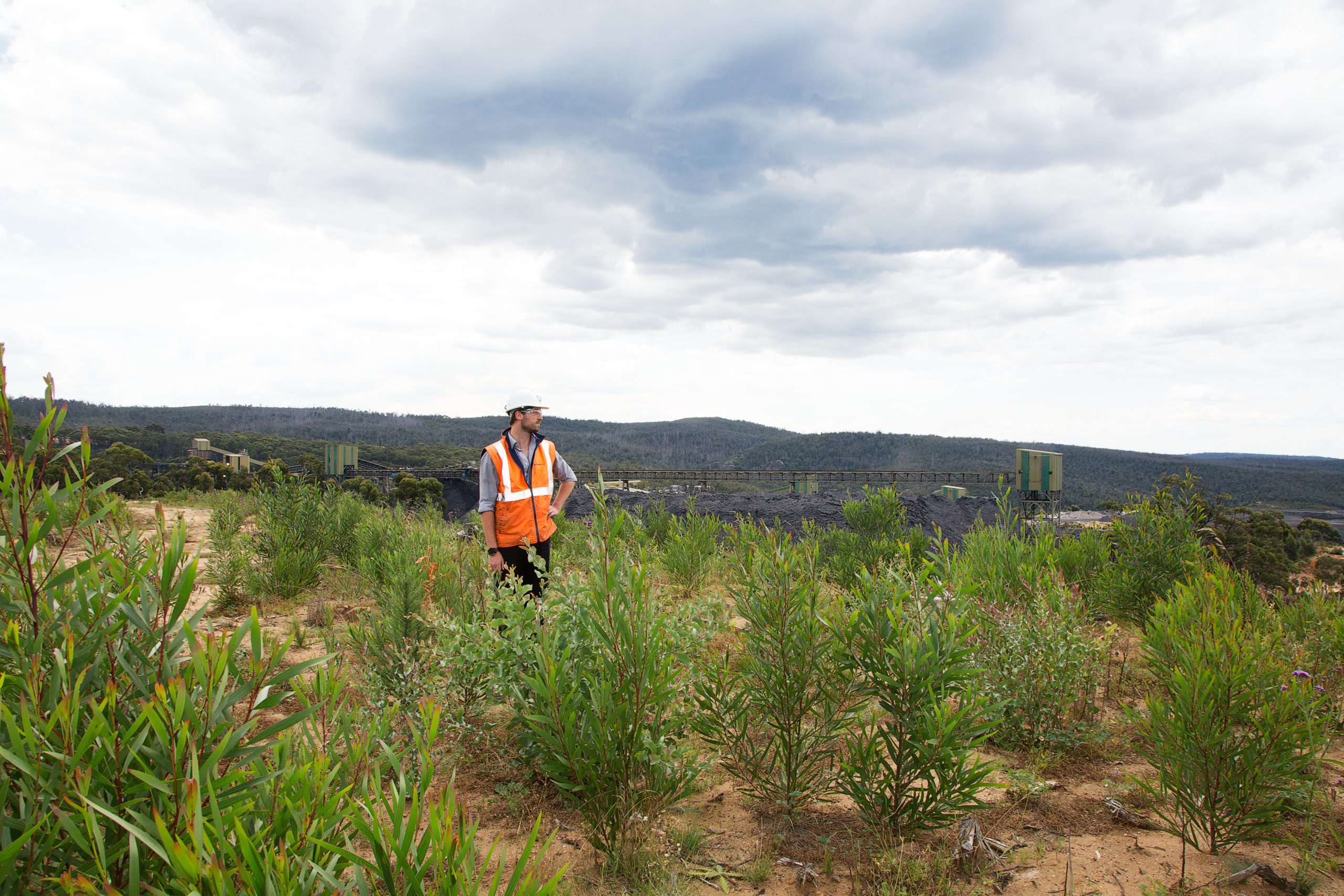
For underground mining, Banpu requires all sites to develop and implement a Rehabilitation Management Plan (RMP) that outlines risk assessment, planning, and implementation measures to eliminate, minimize, and mitigate environmental impacts. A key component of this plan is the revegetation program, which includes planting native trees and shrubs in line with long-term completion criteria. This approach emphasizes on establishing low-maintenance, self-sustaining ecosystems across rehabilitation and forest areas, All activities are carried out under the standard mining lease conditions and reported annually to ensure regulatory compliance and environmental integrity
Mine Subsidence Management
Mine Subsidence presents a significant challenge in underground mining due to its potential to damage infrastructures, disrupt hydrologic systems, and compromise miner safety if not properly managed. At Banpu, we address this through a proactive, data-driven subsidence management plan. The process begins with mine subsidence risk assessments and surface impact analysis, conducted as part of the subsidence impact assessment report. These assessments consider impacts on both constructed features to prevent horizontal movements and natural features, with a particular focus on fauna, flora, and critical habitats such as seagrass beds.
Vertical subsidence impacts are evaluated based on panel extraction designs to ensure movement remains within allowance limits. Banpu applied conservative mine design practices, incorporating stable, long-life pillars with optimal width-to-height ratio and high safety factors. The assessment results are integrated with a geological model to formulate the subsidence management plan. For example, the Point Hatteras Extraction Plan serves as a blueprint for the subsidence management plan of Airly Mine, using sophisticated modeling techniques to predict and plan for potential impacts. Besides, this plan also includes an evaluation of surface environment impacts, covering watercourses, native bushland, steep slopes, and archaeological heritage items.
To ensure effective subsidence management, we conduct regular risk assessments and update the subsidence management plan as part of routine operations. The regular monitoring had been conducted using a network of surface crack stations and bathymetric surveys that track both vertical and horizontal ground movement. These real-time data are compared against model predictions, allowing for continual refinement of subsidence models and further optimizing the subsidence management plan. Performance indicators are established to monitor infrastructure integrity, ecosystem health, and safety. Underground panel surveys and “as-built” verifications are also conducted to ensure mining activities align with approved mine designs, while geotechnical hazard mapping strengthens underground safety protocols.
The subsidence monitoring programs are formally reviewed at least every 3 years or sooner if triggered by stakeholder concerns, changes in management requirements, unexpected impacts, or the need for additional actions. An annual subsidence management report is prepared, incorporating monitoring data and environmental performance to ensure ongoing protection of dependent ecosystems.
In the event that monitoring reveals significant trigger conditions such as exceeding thresholds, we immediately activate the incident response measures. These include notifying and engaging stakeholders through the Community Consultative Committee (CCC), investigating to identify root cause, and implementing corrections to address non-compliance and corrective actions to prevent recurrence. Findings are documented in the annual subsidence management report. This structured and transparent approach not only safeguards the environment and surrounding communities but also reinforces Banpu’s commitment to responsible and sustainable mining practices.
Year in Review
All mine closure and rehabilitation activities have progressed as planned, including void management, Acid Mine Drainage (AMD) management, and biodiversity monitoring program. In Indonesia, Embalut Mine, which transitioned into the closure stage in 2022 after 14 years of operations, continued to support 27 community development projects that directly benefit 10,309 individuals in 2024. These projects focused on income generation, health improvement, and social & cultural development, reflecting the specific needs of the community during and after mining operations.
 English
  Thai
Thai